About Queering the Archives
In 2021, Weber State University's Special Collections embarked on a project to help fill the gaps in the historic record to include stories from the LGBTQ+ community in Weber, Davis, and Morgan Counties.
The movement and theory known as Queering the Archives aims to address the absence of a queer perspective within the field of archival work, which influences how materials are evaluated, preserved, and made accessible.
By embracing a queer lens, the archival institution can undergo a transformation that fosters inclusivity and social justice, while also reimagining historical narratives.
Historically, the archival establishment has reinforced dominant power structures by disregarding and erasing the histories of marginalized communities. To challenge this, queering the archival institutions involves confronting these power dynamics and intervening against the racist, sexist, classist, and heterosexist frameworks that sustain them.
In essence, queering the archive redefines our understanding of lives and opens up boundless opportunities for inclusivity in the pursuit of social justice and the reshaping of history.
Traditionally, the theoretical approach to archival processing has upheld a stance of neutrality and impartiality, allowing future researchers to interpret collections. However, this supposed neutrality has only served to further marginalize individuals deemed 'queer' by society. By incorporating a queer lens during the processing of archival collections, one can challenge conventional structures and actively counteract the racist, sexist, classist, and heterosexist systems that uphold them.
The act of queering is to actively complicate traditional notions of how stories are told and documented. Patrick Steorn suggests going beyond “homosexuality” or “queer” in databases because one will not find hits using these terms, but instead to look into 'contextual research,' in places that could be read as queer. Steorn also brings up a reminder that “the term 'queer' was coined to destabilize homogenous identity categories, so to insert it as a static label in a museum [or in this case archival database] would be to work against its disruptive power” (Zepeda, 2018).*
“Queering the Archives” is generously funded by Project Rainbow Utah, the Utah Humanities Council, and the WSU Office of Diversity.
* Zepeda, Lizeth (2018) | Queering the Archive: Transforming the Archival Process, disClosure: A Journal of Social Theory: Vol. 27, Article 17. DOI
Meet the Team
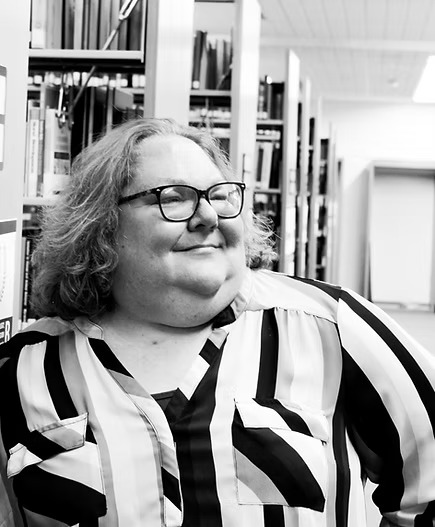
Sarah Langsdon
Head of Special Collections Interviewer & Oral Historian
Hello all! I’m Sarah and my pronouns are she/her. I am an ally and mom to two queer children. We call ourselves the big gay family. I work at Weber State University documenting the history of Weber/Davis Counties and want to make sure that the queer community is part of that. One fun fact about me is that I did a study abroad in Moscow, Russia and oh boy, the stories I could tell.
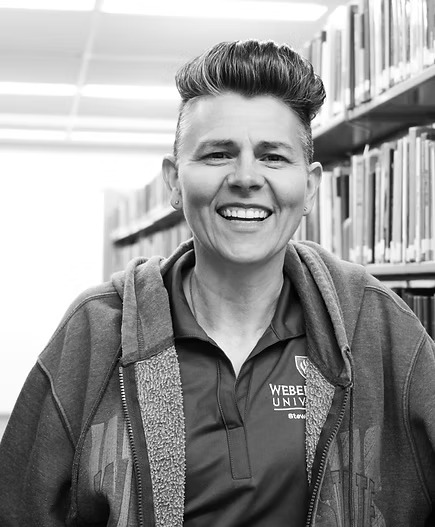
Lorrie Rands
Manuscript Processor & Oral Historian
Hi, my name is Lorrie and my pronouns are she/her. I am gay and a mother of a queer child. I work at Weber State University as an oral historian helping to document the histories and stories of individuals of Weber/Davis Counties. I initially wanted to better understand my child with this project, and now I am excited to share that understanding with the larger community. Fun fact about me is that I love to crochet stuffed animals, especially dinosaurs!
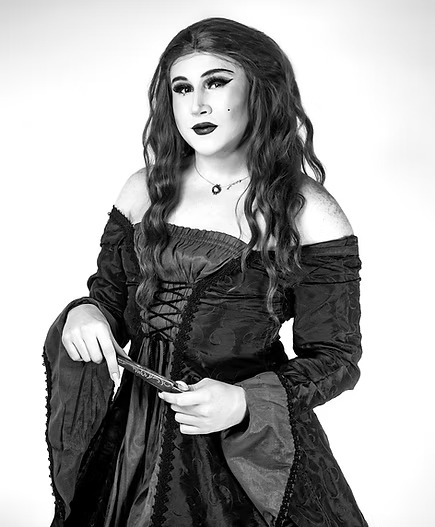
Samantha Stratford
Drag Queen
I'm just your run of the mill Shakespearean Girl Next Door type! Meaning I was born in a celtic forest back in the early 1500's and I've been pounding the cobblestone as an actress, singer, starlet, (witch, historian, cat enthusiast) since then. I’m excited for the opportunity to hear the living history of our community through this fabulous project.
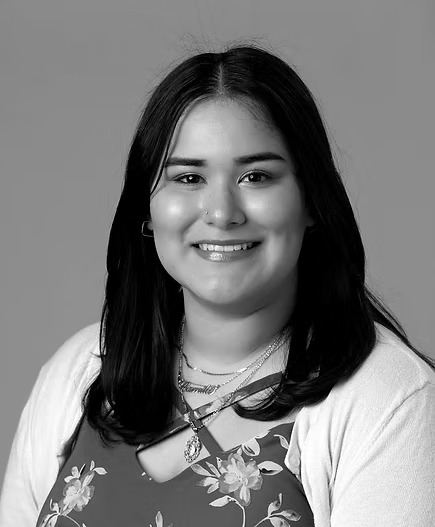
Camila Becerril
Intern Librarian
I am a Weber State Alumni and now Intern Librarian working on this project! I am born and raised in Utah and I'm excited to learn more queer Utah history! I am currently getting my Master's degree in Library Science from the University of Arizona!